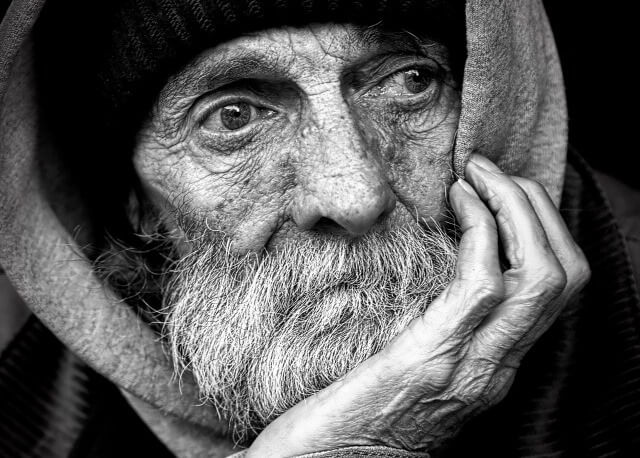
In the icy courtyard of the Israeli embassy in Warsaw, an elderly man stood alone, waiting. He was just skin and bones, with almost no flesh left. His cheekbones protruded, and his eyes had a deadened look. Despite the bitter cold of the Polish winter, his clothes were tattered and worn.
Baruch Duvdevani, who had studied at Rav Kook’s Mercaz HaRav yeshiva as a young man, spent the winter of 1956 in Poland. As director of the Jewish Agency’s Aliyah department, Duvdevani worked from morning to evening organizing the immigration of thousands of Polish Jews who had fled to Russia during World War II.
Duvdevani noticed the old man standing in the corner. He realized that the man was waiting for him to finish speaking with the other Polish Jews gathered at the embassy courtyard.
When the old man saw the opportunity, he approached Duvdevani.
“Are you from Jerusalem?” he asked.
“Yes, I am.”
“Tell me, did you know Rav Kook, of blessed memory?”
“In fact, I did know the rabbi. I was privileged to hear his lofty Torah and inspiring discourses.”
Abruptly, the old man burst into tears. “Oh, what a shame! What a terrible shame that I failed to listen to him!” he sobbed.
Lack of Da’at
After a few minutes, he regained his composure and told his story.
In the early 1920s, I was a successful industrialist in a large city in Poland. One day I decided to make a trip to Eretz Yisrael and spend the Passover holiday in Jerusalem. Being a religious Jew, I visited Rav Kook soon after arriving. He welcomed me warmly and encouraged me to seek out the good of the land and consider settling there.After a few weeks of touring, I returned to the Chief Rabbi and asked him what I should do regarding the second day of Yom Tov, seeing that I was a tourist.
The Rav answered me with a smile. “Decide now to bring your family here and build a factory in the Land. Then you can observe one day of Yom Tov already this Passover, like all residents of Eretz Yisrael.”
I didn’t think Rav Kook’s response was a serious one. Since the holiday was still a few weeks away, I decided to return later on and pose the question again, when it would be more practical.
A few days before Passover, I returned to Rav Kook and asked him once more.
This time, the Rav’s tone was stern. “I already told you that you should move here. Then you may keep one day of Yom Tov starting now, even if you need to return to Poland after Passover to settle your affairs.”
I said to him, “I'm sorry, rabbi. I have given it much thought, but in the final analysis, da’ati la-hazor — my intention is to return to the Diaspora. How then can I celebrate like the residents of Eretz Yisrael?”
The Rav banged on the table. “Your da’at is to return? Your intention to return? That is nothing but lack of da’at [sense]!”
The old man looked down, finishing his story in a broken voice. “I did not listen to the rabbi. I returned to Poland. I lost my wife, my children, and my grandchildren in the Holocaust. Here I am today, alone and desolate. I have returned to Warsaw with nothing, after years of wandering in Russia. And I hear Rav Kook’s prophetic words, constantly ringing in my ears: ‘That is nothing but lack of da’at!'”
(Stories from the Land of Israel. Adapted from Malachim Kivnei Adam, pp. 222-224)