Many years ago at a Passover Seder, one of the guests raised a difficulty in the Torah’s account of the Exodus that he felt was insolvable. None of the answers offered to him satisfied him. Over the years I have searched for a solution to this problem; only recently did I discover that Rav Kook dealt with this apparent contradiction in one of his Sabbath meal discourses.
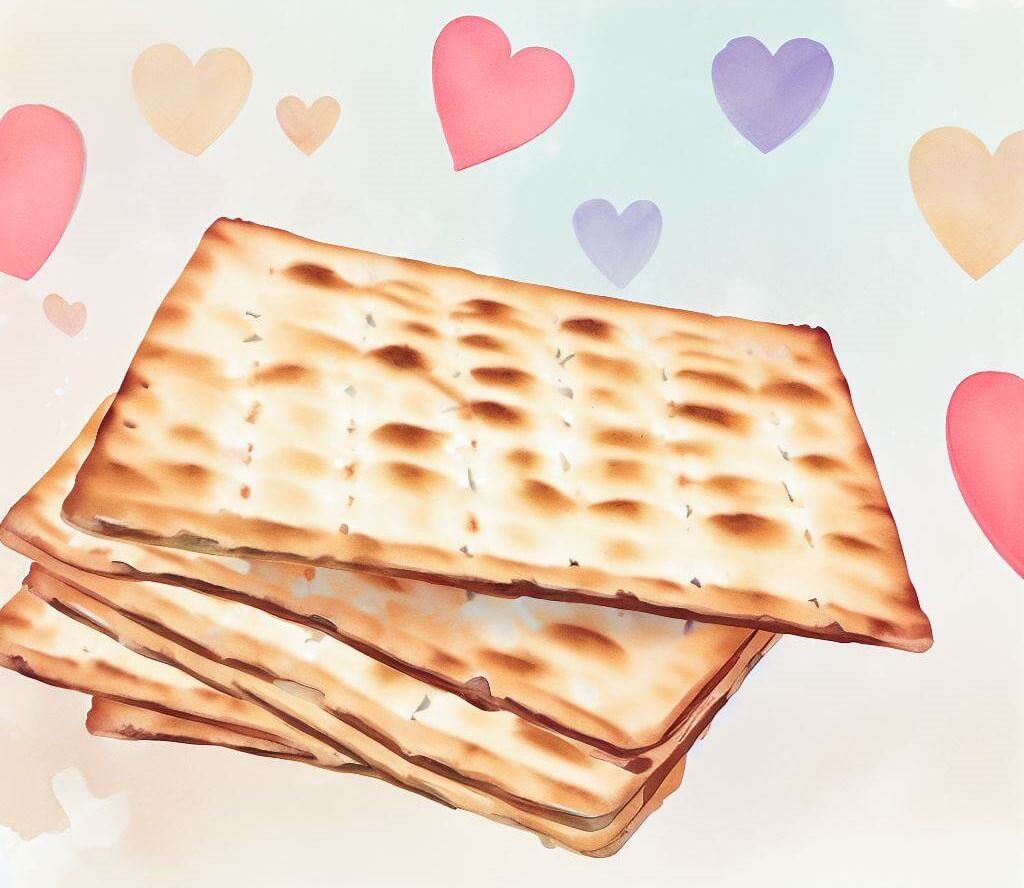
Each year at the Passover Seder, we ask: “This matzah — what is the reason for it?” And we reply that the dough of our ancestors did not have time to rise before God revealed Himself and redeemed them. As the Torah relates:
“They baked the dough that they brought out of Egypt as unleavened matzah, since it had not risen, for they were driven out of Egypt and could not delay” (Exod. 12:39).
But is this the real reason that the Israelites ate matzah? On the first day of the month of Nissan — two weeks prior to their hurried escape from Egypt — they had already been commanded: “On the evening [of Passover], you will eat matzot” (Exod. 12:18).
So why did our ancestors eat matzah? Was it because they needed to leave Egypt in a hurry? Or because God had commanded them to eat matzah?
Two Types of Matzah
The Sages distinguished between two levels in the mitzvah of eating matzah. On the first night of Passover — Seder night — it is obligatory to eat matzah. During the rest of the holiday, however, eating matzah is optional. According to many authorities, even though we are not obligated to eat matzah on these days, by doing so we fulfill a mitzvah.1
Now we may return to our original question. There are in fact two aspects to this mitzvah: a Divine command, and a commemorative act. We eat matzah on the first night to fulfill God’s command, בָּעֶרֶב תֹּאכְלוּ מַצֹּת — “In the evening [of Passover] you will eat matzot.” This matzah is an obligatory service of God, an expression of our reverence for God and acceptance of the binding nature of the Torah’s commandments.
The optional matzah of the rest of Passover, on the other hand, is a symbol of our hastened redemption. It reminds us of a time when “the King of kings revealed Himself” and redeemed us. This is a voluntary mitzvah, an expression of our love for God and appreciation for His great kindnesses to our ancestors and to us.
Which service of God is greater? Serving Him with אהבה or with יראה, love or reverence?
The Ramban on Exod. 20:8 concluded that serving God out of love is a higher level. For this reason, positive mitzvot — which express our love of God — are greater than negative mitzvot, which express awe. And if there is a clash between them, the positive mitzvah takes precedence (Menachot 40a; Yevamot 21a).
Avodat Hashem in the World to Come
We find a very peculiar statement in the Talmud. After the resurrection of the dead, the mitzvot will be annulled (Niddah 61b). Does this assertion not contradict the fundamental principle that the Torah is eternal and will not change?
In fact, the mitzvot themselves will not change. What will change is how they are performed. They will no longer be observed as obligatory commandments of יראה, but as voluntary acts of אהבה, expressing our love of God and His infinite grandeur.
The Talmud in Pesachim 119b describes a great banquet that God will prepare for the righteous in the World to Come. At the end of the feast, God will bestow the honor of reciting the grace after meals to Abraham, Isaac and Jacob.
But why should they be given this special honor? The Sages determined that one who performs mitzvot out of obligation is greater than one who fulfills them voluntarily (Kiddushin 31a). Why should the Patriarchs be given this final honor? After all, their mitzvot were on a lower level, performed voluntarily, before the Torah was given at Sinai?
Nonetheless, the mitzvot of the Patriarchs contained a special advantage. They performed their mitzvot out of love for God, which is higher than reverence and submission. Their mitzvot reflect the path of the future world, when the Torah will be observed naturally, out of pure love.
The future path of serving God with love is thus rooted in the very inception of the Jewish people: in the spiritual lives of the Patriarchs, and in the voluntary matzah which commemorates the redemption from Egypt.
First Discipline, then Love
The order is significant. We begin with the path of mandatory observance, through the discipline of Jewish law. This is the fundamental path of serving God — the service of יראה, obedience and submission. The initial mitzvah of eating matzah, on the first night of Passover, is thus mandatory.
But we continue with the higher path, serving God with love and אהבה. During the remaining days of Passover we fulfill the voluntary mitzvah of eating matzah — matzah that symbolizes God’s promise that He will redeem us, אַחֲרִית כְּרֵאשִׁית, elevating us in the end of days just as He did long ago in Egypt.
(Adapted from Shemu'ot HaRe’iyah vol. IV, Pesach (1929))
1 Chizkuni on Exodus 12:18; Ma’aseh Rav, the compendium of practices of R. Elijah, the Gaon of Vilna.