“The entire congregation is holy, and God is with them. Why do you raise yourselves over God’s community?” (Num. 16:3)
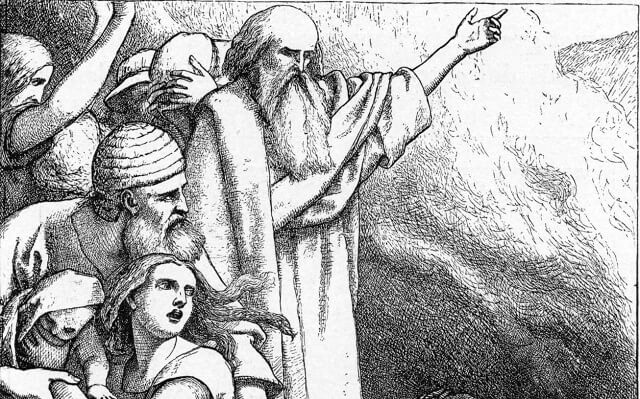
This was the battle cry of Korach’s rebellion — a complaint that, at first glance, seems perfectly justified. Did not the entire people hear God speak at Sinai? It would seem that Korach was only paraphrasing what God Himself told Moses: “Speak to the entire community of Israel and tell them: you shall be holy, for I, your God, am holy” (Lev. 19:2). Why indeed should only the Levites and the kohanim serve in the Temple? Why not open up the service of God to the entire nation?
Havdalah and Chibur
In our individual lives, and in society and the nation as a whole, we find two general principles at work. This first is havdalah, meaning ‘withdrawal’ or ’separation.’ The second is chibur, meaning ‘connection’ or ‘belonging.’
These are contradictory traits, yet we need both. This is most evident on the individual level. In order to reflect on our thoughts and feelings, we need privacy. To develop and clarify ideas, we need solitude. To attain our spiritual aspirations, we need to withdraw within our inner selves.
Only by separating from society can we achieve these goals. The distracting company of others robs us of seclusion’s lofty gifts. It restricts and diminishes the creative flow from our inner wellspring of purity and joy.
This same principle applies to the nation as a whole. In order for the Jewish people to actualize their spiritual potential, they require havdalah from the other nations — as “a nation that dwells alone” (Num. 23:9).
Similarly, within the Jewish people it is necessary to separate the tribe of Levi — and within Levi, the kohanim — from the rest of the nation. These groups have special obligations and responsibilities, a reflection of their inner character and purpose.
Separation in Order to Connect
Yet separation is not a goal in and of itself. Within the depths of havdalah lies the hidden objective of chibur: being part of the whole and influencing it. The isolated forces will provide a positive impact on the whole, enabling a qualitative advance in holiness. These forces specialize in developing talents and ideas that, as they spread, become a source of blessing for all. As they establish their unique traits and paths, life itself progresses and acquires purpose.
We find this theme of havdalah/chibur on many levels. The human race is separate from all other species of life. Through this havdalah, humanity is able to elevate itself and attain a comprehensive quality that encompasses the elevation of the entire world. The Jewish people are separate from the other nations; this separateness enables them to act as a catalyst to elevate all of humanity, to function as a “kingdom of priests and a holy nation” (Ex. 19:6).
The tribe of Levi is separated from the rest of the nation through their special responsibilities; this distinction ennobles the members of the tribe to fulfill their unique role. The Levites sanctify themselves and become a blessing for the entire nation. And the kohanim, with their special holiness, are elevated until they draw forth ruach hakodesh (prophetic inspiration) for the benefit of the entire nation, thus actualizing the nation’s highest spiritual abilities.
The Correct Order
Now we may understand the source of Korach’s error. The Zohar (Mishpatim 95a) teaches:
“The Sitra Achra [literally, the ‘Other Side’ — the forces of evil] begins with chibur [connection] and ends with pirud [division]. But the Sitra deKedushah (‘Side of Holiness’) begins with pirud and ends with chibur.”
The correct path, the path of holiness, follows the order of first separating and then connecting. In other words, the separation is for the sake of connection. But Korach’s philosophy (and similar ideologies, such as communism) took the opposite approach. He sought a simplistic inclusiveness of all, binding all people into one uniform group from the outset. He boastfully claimed to unite all together — “The entire congregation is holy.” This approach, however, replaces the splendor of diversity with dull uniformity. In the end, this totalitarian approach leads to disunity, as all parts yearn to break apart in order to express their unique individuality. “The Sitra Achra begins with chibur and ends with pirud.”
(Sapphire from the Land of Israel. Adapted from Orot HaKodesh vol. II, p. 439)