Inhabitants of the Land
The Torah reading of VaYishlach concludes with a list of Esau’s descendants and chieftains. Since Esau married into the Canaanite family of Seir, settling in his hill country in the south, the text records the sons of Seir, “the inhabitants of the land” (Gen. 36:20).
Why does the Torah refer to them as "the inhabitants of the land"? We could ask humorously, as the Talmud does: Did everyone else live in the sky and only Seir’s clan lived in the land?
The simple explanation is that Seir and his family were the original residents of the region. But the Talmud opted for a different interpretation: these Canaanites were true inhabitants of the land. They were unparalleled experts in farming, having acquired a remarkable knowledge of which crops were best suited for each type of soil.
They would counsel: plant olive trees in this field, grapevines in this field, and fig trees in that one.
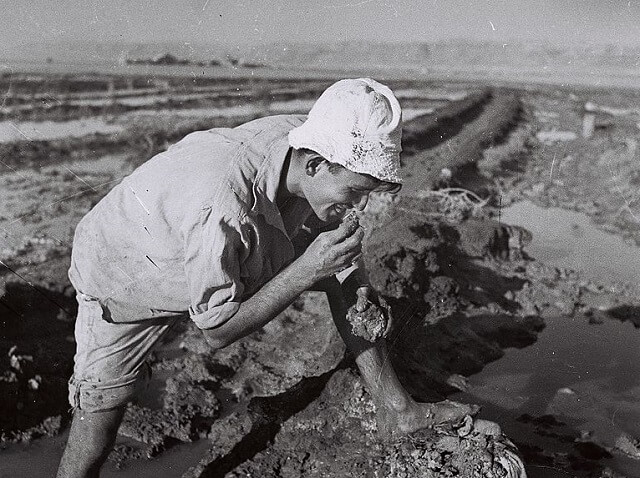
They were called ‘Chorites’ because they could smell (merichim) the soil [to assess its suitability for various crops]. And they were called ‘Chivites’ since they would taste the soil like a snake (chivya). (Shabbat 85a)
Why does the Torah emphasize the agricultural expertise of the Canaanites?
And a more basic question: why did God place these idolatrous nations in the Land of Israel? Would it not have been simpler for the Jewish people to acquire Eretz Yisrael without having to conquer it from the Canaanite nations?
The First Settlers
God meant for man to work the land, “to till the ground from which he was taken” (Gen. 3:23). But acquiring an intimate knowledge of the land requires tenacious dedication to this area of study. How could humanity gain the necessary skills to work the land when occupied with higher spiritual goals? The pioneers of agriculture would only succeed if undistracted by other pursuits.
These “first settlers” (Deut. 19:14) tilled the land before the light of Torah was revealed in the world. Without higher aspirations, they could invest all of their energies to the study of agriculture and farming. The Canaanites were truly “inhabitants of the land.” Their ties to the land enabled them to establish the foundations of agrarian society. This prepared a solid economic basis for future — and morally superior — generations.
Agrarian Culture
Their mastery of agriculture included detailed knowledge of the optimal conditions for each crop. Interestingly, the Talmud cites their cultivation of three crops: olives, grapes, and figs.
Even farmers who share the Canaanites’ absorption in agricultural pursuits have a culture and a spiritual life. They create an earthy society that appreciates beauty, festive joy, and physical pleasures.
While the Canaanites were experts in growing staples such as wheat and barley, their expertise extended to crops that highlight these cultural aspirations. The olive represents external beauty and aesthetics, “to make the face radiate from olive-oil” (Psalm 104:15). The grape embodies joy, “Wine gladdens a person’s heart” (ibid). And the fig, a natural source of sweetness, is a symbol of physical pleasures.
Laying the Foundation for Future Generations
Of course, the Canaanites’ deep connection to the land was not an end to itself. They set the stage for a more advanced society. These ancient agronomists were “relieved” of their holdings, as the Talmud writes,
They are called ‘Chorites’ because they were freed (bnei chorin) from their possessions. (Shabbat 85a)
Humanity was not meant to be forever mired in earthiness. An idolatrous and immoral society established a thriving agricultural economy, but it was not meant to possess the land for all generations. As human civilization advanced, it lost these deep, primal ties to the soil. The artificial freedom of a base, earthy culture is a freedom that brings with it exile, as it is superseded by a society with higher goals and moral standards.
(Adapted from Ein Eyah vol. II, pp. 165-166)