Upon his return to Eretz Yisrael, Jacob sent a message to his brother Esau: "I have an ox and a donkey” (Gen. 31:6). Why was it necessary to tell Esau about this ox and donkey?
According to the Midrash (Breishit Rabbah 75), Jacob was not speaking about the material possessions he had amassed, but about something of far greater significance. The ox refers to Mashiach ben Joseph, the precursive Messianic leader descended from Joseph. The ox is a symbol of the tribe of Joseph; both Jacob and Moses used the imagery of an ox when blessing Joseph (Gen. 49:6; Deut. 33:17).
And the donkey? That is a reference to Mashiach ben David, the ultimate Messianic king descended from David, who will arrive as “a pauper riding on a donkey” (Zechariah 9:9).
Why do we need two Messianic leaders? And why are they represented specifically by these two animals?
Two Forces
In a remarkable eulogy entitled "The Eulogy in Jerusalem,” delivered after Theodore Herzl’s death in 1904, Rav Kook explained this concept of two Messiahs. The eulogy beautifully articulates his views on the secular Zionist movement and the tragic rift between the religious and secular sectors of the Jewish people.
God created us with both body and soul. We have forces that maintain and strengthen the body, and forces that protect and develop the soul. The ideal is to have a robust body together with a strong and healthy soul. The soul, with its remarkable faculties, is meant to utilize the body to fulfill God’s will in this world.
The Jewish people function in an analogous fashion to the body and soul. There are forces within the nation that correspond to the body, working to meet its material and physical needs. These forces prepare a firm basis for Israel’s holy mission. And there are forces in the nation that work directly toward developing Israel’s special spiritual qualities.
Efforts to promote public security and welfare are common to all nations, just as all creatures have bodily and physical functions. But the higher aspect of furthering our spiritual aspirations on the national level is unique to the Jewish people — “It is a nation dwelling alone, not counted among the other nations” (Num. 23:9).
Joseph and Judah
These two tasks were divided between two tribes, Joseph and Judah. Joseph looked after the material needs of the Israelites in Egypt. The Sages taught that Joseph spoke seventy languages, thus indicating that his task was a universal one, common to all nations. He protected the Jewish people in Egypt, and is described as “the opposing force to Esau” (Breishit Rabbah), defending the nation against those who attack the Jewish people.
Judah, on the other hand, was responsible for cultivating the special holiness of the Jewish people. “Judah became His holy nation” (Psalms 114:2).
Ultimately, both of these aspects were to be combined in the Davidic monarchy. David was a warrior who fought the enemies of Israel and brought peace to the nation. But he was also the “sweet singer of Israel,” the psalmist who would rise at midnight to compose holy poems praising God.
The Split
When Jeroboam led the northern tribes of Joseph to split from the southern kingdom of Judah, he introduced a tragic divide between these two forces, the material and the spiritual. The Midrash says that God grabbed Jeroboam by the coat and told him: “If you repent, I and you and [David] the son of Jesse will walk together in the Garden of Eden.” Together, you and the Davidic monarch will nurture the Jewish people and enable them to accomplish their Divine mission.
Jeroboam’s reply, however, was: “Who will lead?”
God answered, “The son of Jesse will lead.”
Jeroboam refused to recognize the pre-eminence of the nation’s spiritual mission. Throughout history, we have witnessed the ongoing conflict between these two forces: secular movements that work towards improving the nation’s material lot, and religious ones that promote its spiritual nature exclusively.
The redemption of the Jewish people can only be attained when both of these forces are functioning. Those who work towards strengthening the nation’s spiritual aspects are preparing for Mashiach ben David, who personifies the ultimate goal of the nation. This spiritual goal, however, cannot be attained without the necessary material foundations. All efforts to better the material conditions of the nation are part of Mashiach ben Joseph’s mission.
The Fall of Mashiach ben Joseph
The Talmud in Sukkah 52a teaches that Mashiach ben Joseph will be killed, and that a “great eulogy in Jerusalem” (Zechariah 12:13) will be delivered at his death. What is the significance of this piercing eulogy, when the nation will mourn the loss of Mashiach ben Joseph “as one mourns for an only child”?
Due to the rift within the Jewish people, these two forces clash. Those who promote the nation’s material aspects belittle the importance of Torah and mitzvot. And those who stress the special nature of Israel reject all changes and attempts to better its material standing. This leads to rebellion against religion on one side, and anemic stagnation on the other.
With the fall of Mashiach ben Joseph, all will realize that these are not opposing movements, but forces that should work together so that material progress will form a basis for developing the unique character of the nation. This is the significance of the “great eulogy in Jerusalem.” All sectors of the nation will mourn this loss, all will recognize that it is a tragic mistake for these forces to be divided and estranged from one another.
The Ox and the Donkey
What about Jacob’s message to Esau? Why did he use these two animals, the ox and the donkey, to allude to the two Messianic leaders?
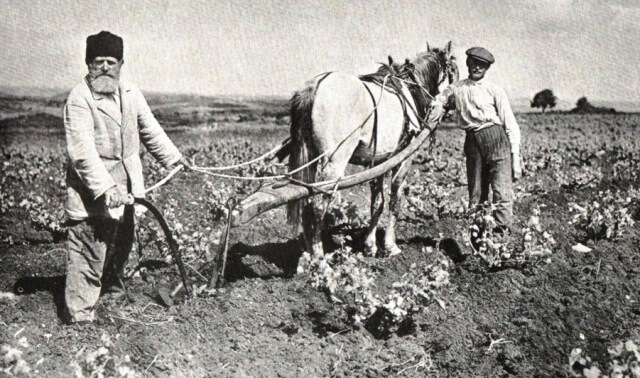
The ox is used to plow the ground, preparing the area to be planted. This corresponds to the mission of Mashiach ben Joseph — to defend the nation from enemies and prepare the way for the revelation of Mashiach ben David. We also see this in the fact that the Tabernacle, a preparation for the Temple, was established in Shiloh, in the territory of Joseph, while the Temple itself was built in the inheritance of Judah.
The donkey, on the other hand, is used to carry produce from the field. This corresponds to the mission of Mashiach ben David, who brings the final fruit of redemption.
A Hint to Esau
Jacob’s message to his brother, “I have an ox and a donkey,” alluded to the future Messianic Era, a time when he will no longer fear Esau’s enmity. We find a second hint later on. After the two brothers meet, Jacob promises that he will visit Esau on Mount Seir. The Sages wrote:
We searched throughout the text of the Torah, but we never found that Jacob visited Esau on Mount Seir. It could not be that Jacob was deceiving him. So when will Jacob go to him? This will take place in the future era, as it says, Saviors will ascend Mount Zion to judge the mountain of Esau (Obadiah 1:21). (Breishit Rabbah 78:14)
(Sapphire from the Land of Israel. Adapted from Shemuot HaRe’iyah (VaYishlach 5691), quoted in Peninei HaRe’iyah, pp. 68-72. "Eulogy in Jerusalem” from Ma’amarei HaRe’iyah, pp. 94-99.)