The three weeks between the fasts of the 17th of Tammuz and the 9th of Av is a time of mourning, commemorating the calamities that befell the Jewish people during this time: exile from the Land of Israel, destruction of Jerusalem and the Temple. This time is called Bein Ha-Metzarim, a time when the Jewish people are “Between the Straits.”
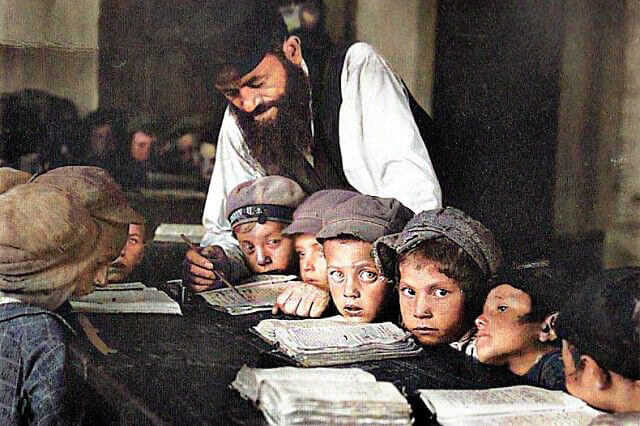
The Shulchan Aruch mentions a curious custom: teachers should not strike their students during the Three Weeks. Not that teachers are encouraged to hit students during the rest of the year; but during this period of mourning, they should be especially careful to avoid punishing students. This custom is the source for Rav Kook’s dictum for the month of Tammuz:
מִבֵּין הַמִּצְרִים נִגְאַל עַם, עַל יְדֵי מוֹרִים חֲמוּשִׁים בִּגְבוּרָה רוּחָנִית, שֶׁאֵינָם צְרִיכִים לְמַקֵּל חוֹבְלִים.
The nation is redeemed from ‘Between the Straits’ by teachers who are armed with spiritual might, teachers who do not need a beating rod.
Rav Kook took this custom and transformed it into something much greater: a philosophy of education in the modern era. Our youth cannot be subdued with rods; they cannot be coerced with threats of punishment in this world or the next. We can only reach them, Rav Kook taught, with love and spiritual greatness. A generation in spiritual distress — “between the straits” — must be inspired by teachers equipped with a broad vision and lofty spirits.
A Generation that Seeks High Ideals
Rav Kook thought deeply about the rampant rejection of traditional Jewish observance that he witnessed. Unlike the prevalent opinion of other rabbinical leaders, who attributed the flood of secularization to widespread hedonism and a lack of integrity, Rav Kook interpreted the phenomenon in a radically different way. He presented his analysis in a highly significant essay entitled Ma’amar HaDor (“The Generation”). There he wrote:
Our generation is an amazing, wondrous phenomenon. It is difficult to find a similar case in all of our history, a generation composed of contradictions, a mixture of light and darkness.
It is precisely the nation’s greatness that has brought about its spiritual decline. This generation finds that all it hears and sees from its parents and teachers is beneath it. The morals [of the previous generation] fail to capture its hearts and quench its thirst, they fail to instill fear and trepidation. This generation has already risen beyond the stage when one runs away due to fear, real or imagined, physical or spiritual.
Great persecutions and upheavals have made them tough and intrepid. Fear and threats cannot move them. They will only rise and follow a path of life that is lofty and enlightened. Even if they wanted to, they cannot be bowed and bent, saddled with burdens and yokes... They cannot be motivated to return [to traditional Judaism] through fear.
But they are very much capable of returning to Judaism through love.... A great-spirited generation seeks, and must seek, in every direction that it turns, great ideals.
This is not a generation of pettiness, but one of greatness and high ideals. The only way to reach out to such a generation is through spiritual greatness.
Path of Pleasantness
A careful analysis of the wording in Rav Kook’s adage reveals an additional insight. The phrase “beating rod” does not appear in the Shulchan Aruch. This phrase comes from Sanhedrin 24a, where the Sages contrasted the Torah scholars of the Land of Israel with those living in Babylonia.
The Babylonian scholars were sharp and caustic in their legal debates. Their method of Torah study was often like a “beating rod,” sharp and unpleasant.
The scholars of Eretz Yisrael, on the other hand, would gently correct one another. Their gracious method of study was characterized as noam, one of pleasantness and mutual respect.
In short, a successful educational approach for our time must embrace two qualities:
- It must incorporate a spiritual greatness that will inspire an idealistic generation.
- It must adopt the pleasant path of the gentle scholars of Eretz Yisrael, who did not resort to the harsh methods of their colleagues in the Exile.
(Adapted from Mo'adei HaRe’iyah, p. 533)
Illustration image: Children learning in cheder in Poland, 1924