Make sacred clothes for your brother Aaron, for dignity and beauty.... They will be used to consecrate him and make him a priest to Me. (Ex. 28:2-3)
Why Do We Wear Clothes?
Clothing has a dual purpose. Its first function is utilitarian, protecting us from the elements — the cold and the rain, the wind and the sun. In this respect, our apparel corresponds to the fur of beasts and the feathers of birds, except that the animals have it better. They never need to change clothes or worry about acquiring new ones when their garments wear out or no longer fit. Their wardrobe comes naturally.
The second function of clothing, on the other hand, is unique to humans. Our attire affects our state of mind; it influences how we feel about ourselves and the image that we wish to project. We feel unhappy when wearing unattractive or ill-fitting clothes, and feel good when wearing apparel that is flattering. We feel comfortable in casual clothing, and dignified in formal wear.
This second aspect of clothing has great ethical value. It stresses those qualities that separate us from the animals and their simple physical needs. It enables us to attain a heightened sense of holiness and dignity. When we cover our heads, wear modest dress, and observe the mitzvot of tefillin and tzitzit, we deepen our awareness of God’s constant presence.
David’s Punishment
When King David was elderly, residing in his cold Jerusalem palace, he was unable to keep himself warm in the winter, no matter how many layers of clothing he wore (I Kings 1). Why was it that clothing no longer kept the king warm?
The Sages taught that David was punished in his old age for an act he had performed many years earlier. When King Saul was hunting for David in the caves of the Judean desert, David stole into the king’s encampment and surreptitiously cut off a corner of the king’s cloak.
David paid a heavy price for this act of disrespect toward clothing. “One who treats clothing contemptuously will later find himself unable to derive benefit from them” (Berakhot 62b).
In light of our analysis of clothes, the rationale behind King David’s punishment becomes clearer. The two aspects of clothing — its utilitarian and ethical functions — are interrelated. If we fail to appreciate clothing’s contribution to human dignity and morality, its role in raising us above the animals, then we have overlooked its principal benefit. It is only due to clothing’s ethical value in helping us to acquire refined traits that we also enjoy its physical benefit — its provision of warmth and comfort. If clothes were meant only to protect us from the elements, we would have been better off with a good coat of fur.
When David tore the royal garments, he belittled the key purpose of clothing. His punishment demonstrates that, stripped of its ethical function, clothing loses its true value. And then, even its utilitarian value is lost.
(Sapphire from the Land of Israel. Adapted from Ein Eyah vol. II, p. 354)
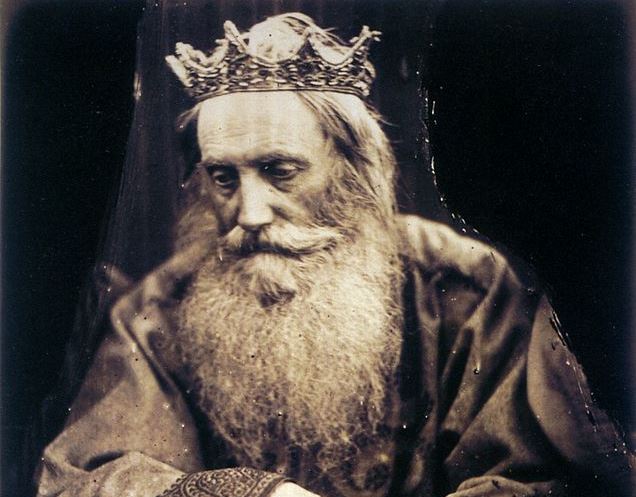
Illustration image: ‘Study of King David’ (Julia Margaret Cameron, 1866)