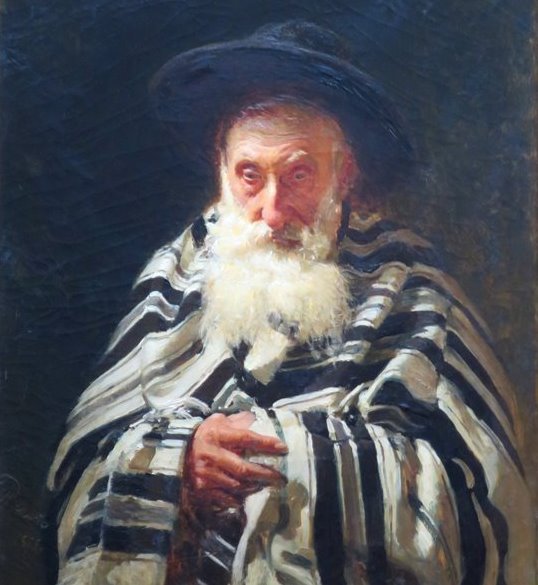
How should we dress when praying? The Talmud (Shabbat 10a) records two contradictory opinions as to what is appropriate attire for prayer:
Rava bar Rav Huna would put on fine shoes when he prayed. As the verse says “Prepare yourself to meet your God, O Israel” (Amos 4:12).
Rava, on the other hand, would remove his cloak, clasp his hands together, and pray like a servant before his master.
Which approach is correct? Should we wear fine, formal attire when praying? Or should we adopt the humble demeanor of a lowly servant entreating his Master?
Reverence and Love
The different approaches of these two scholars correspond to two types of prayers. Some prayers are Bakashot — petitions and requests. Other prayers are Shevach, songs and praises of God. Each type of prayer projects a certain image of our relationship with God, and they impact the soul accordingly.
When we pray for God’s assistance, we are keenly aware of our deficiencies and limitations. God is our pillar, supplying our needs and sustaining life. We rely on His constant kindness and mercy. When we present our requests in prayer, we are like a servant petitioning his master.
Rava would emphasize this humble demeanor by removing his cloak — an expensive article of clothing, conveying pride and respect — before praying. We have no reason to be proud of our inadequate material state. In addition, Rava would clasp his arms together. This gesture indicated his helplessness and dependence on God’s kindness.
In short, Rava emphasized the aspect of prayer that corresponds to yirah, the awe and reverence of a lowly servant before his Master.
Rava bar Rav Huna, on the other hand, viewed prayer as an expression of ahavat Hashem, our love for God. He approached prayer like a loving and favorite child, donning his finest clothing before meeting with his beloved father.
The soul is uplifted as we sing God’s praises and acknowledge His greatness. We gain greater awareness of the soul’s lofty potential, and the soul is more receptive to inquire into the truth of its Maker. As we plumb the depths of wisdom and knowledge, pondering God’s infinity and greatness, our service of God is based on the attribute of ahavah. This in turn refines our desires in life and elevates our deeds.
Infinite Potential
The approach of ahavah, however, requires caution with regard to one particular pitfall. An individual might mistakenly believe that he has already reached such a high spiritual level that he no longer needs to be careful regarding his day-to-day conduct and behavior. In his mind, minor acts only serve to inculcate proper traits and correct beliefs — which he has already acquired.
Therefore, Rava bar Rav Huna quoted the verse, "Prepare yourself to meet your God, O Israel.” Why did the prophet exhort us to constantly prepare? The verse’s underlining message is the soul’s infinite potential for spiritual growth. No matter what level a person has attained, one should prepare to attain an even higher level. And a person must always guard against the increasing danger of falling from his spiritual state. As the Sages cautioned, “The greater the person, the greater his evil inclination” (Sukkah 52a).
Rava bar Rav Huna would take care to dress in fine clothing when praying. Wearing special clothes raises our awareness of the nobility of the soul as it sings God’s praise.
The scholar in particular emphasized his footwear. He wanted to show that even the lowest, most trivial act requires thought and consideration. All of our deeds should match the elevated level of the soul.
A Time For Each
Given these two opposing approaches, each based on a different type of prayer and Divine service, what should we do? Pray in simple and humble dress, or in fine clothing?
The Talmud concludes with testimony of how Rav Kehanah would dress for prayer:
When there was trouble in the world, Rav Kehanah would remove his coat, clasp his arms together, and pray like a servant before his master.
But in times of peace, he would dress honorably, cover himself with a talit and pray, as it says, “Prepare yourself to meet your God, O Israel.”
In the end, we need to both awe and love in our service of God. Sometimes we need to restrain ourselves and carefully watch that we do not descend into materialism and improper conduct. Other times, we need to deepen our love for God by increasing our positive actions.
When should we choose the reverent approach of yirah, and when the devotional path of ahavah?
The best advice is to consider the state of society and the world at large. We should see ourselves as part of the greater reality, at least that which is close to us. Rav Kehanah taught that when there is suffering and misery in the world, this is a sign that the world is lacking those moral qualities that come from yirah, guarding against destructive traits and deeds. In troubled times, Rav Kehanah would clasp his arms together and remove his cloak before praying. In this fashion, he would emphasize the outlook of reverence and awe, like a lowly servant standing before his Master.
But when the world is at peace, it is time to promote positive traits and deeds. Rav Kehanah would then dress in fine clothing, to open the heart and bolster good inclinations. With this preparation, he indicated that he sought higher awareness of God’s infinite light and greater love for God, like the joyful service of a loving son. Donning formal attire, he fulfilled the prophet’s injunction for continual spiritual growth: “Prepare yourself to meet your God, O Israel.”
(Adapted from Ein Eyah vol. III, pp. 2-3.)