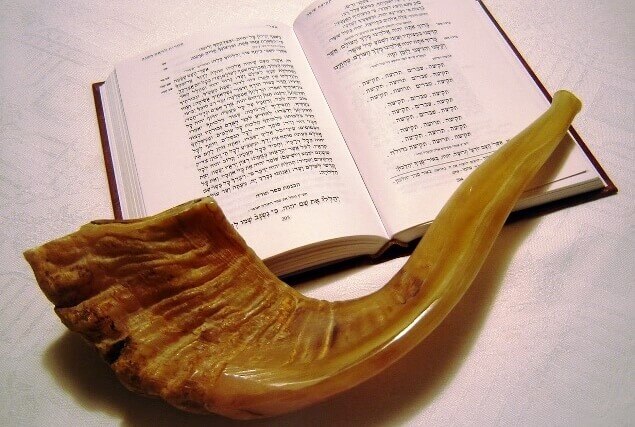
What is the significance of the various blasts of the shofar?
The shofar is a wake-up call, stirring us to mend our ways and do teshuvah. As Maimonides wrote in the Mishneh Torah, the shofar calls out to us: “Sleepers, wake up from your slumber! Examine your ways and repent and remember your Creator” (Laws of Repentance 3:4).
Thus, when looking for an explanation of the shofar blasts, we should examine ideas that are connected to this theme of spiritual awakening.
From Soul to Character to Action
The initial blast of the shofar is a long, constant sound called a tekiyah. This simple, sustained call relates to the soul’s inner source of holiness, its innate connection to God. The soul’s inner essence is rooted in an elevated realm that is “infinitely good and infinitely long,” musically evoked by the long, clear tekiyah blast.
However, this inner holiness should not remain concealed within the soul. Spiritual awakening means that this holiness is expressed in character traits and actions. Therefore the long tekiyah blast is followed by a series of shorter blasts, called shevarim.
The fragmented sounds of the shevarim correspond to the process of the inner soul expressing itself through particular character traits. Unlike the broad strokes of abstract concepts, the soul’s enlightened glimpses of Divine ideals, character traits are more defined and specific: kindness and generosity, integrity and resolve, and so on. Thus the shevarim consist of a series of broken blasts, shorter than the tekiyah.
Yet we are not content with only refining character traits. Our spiritual awakening should also elevate our actions. Therefore the shevarim are followed by even shorter blasts, the rapid staccato sounds called teruah. Since actions are even more detailed than traits — specific behaviors that express the qualities of kindness, integrity, and so on — they are audially represented by the rapid trill of the teruah.
In summary: we focus on the soul’s inner essence (the tekiyah) in order to influence and refine our character traits (the shevarim), which in turn guide and elevate our actions (the teruah).
The Final Tekiyah
Each set of shofar blasts concludes with a final tekiyah. Like the first tekiyah, this tekiyah represents the soul’s core holiness. But while the first tekiyah signifies this inner essence as a potential force, the final tekiyah represents the actualization of its influence on our traits and deeds.
When Teshuvah Is Incomplete
This explanation describes the complete set of shofar blasts — tekiyah-shevarim-teruah-tekiyah. However, we also blow two partial sets of shofar blasts, with only shevarim or teruah in the middle. What do these series of blasts represent?
Ideally, both our traits and our actions should be guided by the soul’s inner holiness. But there are also situations of incomplete spiritual awakening. Some individuals may behave properly, but fail to refine their character traits. This situation is represented by the set of tekiyah-teruah-tekiyah, since only the teruah blasts (i.e., the actions) are influenced by the inner holiness of the tekiyah.
In other cases, there may be internal or external obstacles that prevent the inner soul from expressing itself in action. Nonetheless, there may still be a refinement of character traits. This situation is represented by the set of tekiyah-shevarim-tekiyah, as only the shevarim (the traits) are influenced by the tekiyah.
Clearly, the optimal situation is when the inner holiness is able to penetrate all levels, encompassing shevarim as well as teruah, both character traits and deeds. This ideal state is expressed in the psalmist’s praise of those who recognize the importance of the teruah and know how to bring their inner holiness into their walk, their practical path in life:
Fortunate is the nation that knows the teruah-blast; O God, they will walk in the light of Your countenance. (Psalms 89:16)
(Silver from the Land of Israel. Adapted from Olat Re’iyah vol. II, pp. 326-327.)