The Dwellers of Your House
This beautiful psalm expresses our yearnings to be close to God and His holy Temple: “My soul longs and pines for God’s courtyards!” (Ps. 84:3). Yet its most famous verse opens with the word Ashrei (fortunate):
אַשְׁרֵי יוֹשְׁבֵי בֵיתֶךָ. עוֹד יְהַלְלוּךָ סֶּלָה
Fortunate are those who dwell in Your house. They will continue to praise You, selah. (Ps. 84:5)
The Sages designated this verse to introduce Psalm 145 in the daily prayers. In fact, because of this opening verse, that chapter in the prayers is commonly referred to as Ashrei.
But who are these fortunate ‘dwellers’ in God’s house? And would it not be preferable to pray in His house, rather than just sit there?
Preparations for Prayer
The Sages recognized that heartfelt prayer requires some degree of mental preparation. They taught, “One should not rise to pray until first acquiring a reverent state of mind“ (Berakhot 30b). We cannot make the sudden switch from our mundane activities to earnest prayer without a mental effort to clear our thoughts and focus our minds.
The Talmud describes two levels of mental preparation for prayer. The minimal level, which is expected of all people, is to acquire a general attitude of solemnity and reverence. The Sages referred to this state of mind as koved-rosh, literally ‘heavy-headedness.’ We need to do away with any light-headedness and frivolity, and direct our thoughts toward higher values and eternal truths.
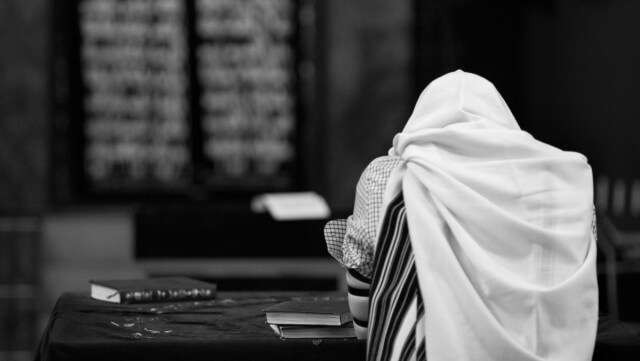
There is, however, a more intensive level of preparation for prayer. The chasidim rishonim, the saintly pious of ancient times, would meditate for a full hour before each prayer. They would not begin praying until they knew that “their hearts were fully directed toward their Father in heaven.”
Why did these pious individuals need so much time to prepare for prayer?
Directing Both Mind and Heart
The minimal level — focusing our thoughts on lofty matters — does not necessitate such a lengthy preparation. In a relatively short time, we can purify our thoughts by reflecting on positive and holy images.
But the chasidim rishonim also wanted to uplift their hearts — “until their hearts were fully directed.” Full control of our emotions and desires is a far more complicated matter. Personality traits, wants and desires are connected to our physical side. It takes time and effort to analyze our feelings and inclinations and guide them toward holy goals.
The pious of old based their lengthy preparations on the verse, “Fortunate are those who dwell in Your house.” The psalmist is not referring to a person who makes a brief visit to the house of God. This is not just a quick focusing of one’s thoughts on holy matters. Rather, the verse speaks of those who dwell in God’s house. These saintly individuals meditated at length, refining their desires and purifying their character traits to be in sync with their mind’s enlightenment. Such an intense preparatory effort requires a lengthy stay in the realm of the spiritual and the eternal.
Spiritual Stability
The verse concludes with the assurance that those who dwell in Your house “will continue to praise You, selah.”
The Sages taught in Eiruvin 54a that the word selah indicates something of a continuous and eternal nature. Those who dwell in God’s house, as they strive to elevate their hearts and emotions, attain a more stable level of holiness. They acquire a harmony in heart and soul that enables them to continually “praise You, selah.” In this way, they experience a consistent level of holiness and God-awareness.
Now it is clear why this verse was placed at the beginning of Ashrei, to be recited at the start of the prayer service. We are reminded to prepare our state of mind before praying — and to take inspiration from those remarkable chasidim rishonim who would “dwell in God’s house” in deep meditation, focusing their minds and uplifting their hearts.
(Adapted from Ein Eyah, vol. I, pp. 127, 154)