Contradictions between science and Torah appear particularly irreconcilable with respect to the Torah’s description of the creation of the world and the beginnings of humanity. Are these accounts meant to be taken literally? Should we believe that the universe came into existence some 5,780 years ago? Must we reject the theory of evolution out of hand?
In a letter written in Jaffa in 1905, Rav Kook responded to questions concerning evolution and the geological age of the world. He put forth four arguments:
1. Even to the ancients, it was well known that there were many periods that preceded our counting of nearly 6,000 years for the current era. According to the Midrash, “God built worlds and destroyed them,” before creating the universe as we know it. Even more astonishing, the Zohar states that there existed other species of human beings besides the “Adam” who is mentioned in the Torah.[1]
2. We must be careful not to regard current scientific theories as proven facts, even if they are widely accepted. Scientists are constantly raising new ideas, and the scientific explanations of our time may very well come to be laughed at in the future as imaginative drivel.
3. The fundamental belief of the Torah is that God created and governs the universe. The means and methods by which He acts, regardless of their complexity, are all tools of God, Whose wisdom is infinite. Sometimes we specifically mention these intermediate processes, and sometimes we simply say “God formed” or “God created.”
For example, Scripture mentions “the house that King Solomon built” (I Kings 6:2). The Torah does not detail how Solomon spoke with his advisors, who in turn instructed the architects, who gave the plans to the craftsmen, who organized the actual building by the workers. It is enough to say, “Solomon built.” The rest is understood and is not important.
So, too, if God created life via the laws of evolution, these are details irrelevant to the Torah’s central message, namely, the ethical teaching of a world formed and governed by an involved Creator.
4. The Torah concealed much with regard to the process of creation, speaking in parables and ciphers. Creation, which the mystics refer to as Ma’aseh Bereishit, clearly belongs to the esoteric part of Torah (see Chagigah 11b). If the Torah’s account of creation is meant to be understood literally, what then are its profound secrets? If everything is openly revealed, what is left to be explained in the future?
God limits revelations, even from the most brilliant and holiest prophets, according to the ability of that generation to absorb the information. For every idea, there is significance to the hour of its disclosure.
For example, if knowledge of the rotation of the Earth on its axis and around the sun had been revealed to primitive man, his courage and initiative may have been retarded by fear of falling. Why attempt to build tall buildings on top of an immense ball turning and whizzing through space at high velocity? Only after a certain intellectual maturity, and scientific understanding about gravity and other compensating forces, was humanity ready for this knowledge.
The same holds true for spiritual and moral ideas. The Jewish people struggled greatly to explain the concept of Divine providence to the pagan world. This was not an easy idea to market. Of what interest should the actions of an insignificant human being be to the Creator of the universe? Belief in the transcendental importance of our actions is a central principle in Judaism, and was disseminated throughout the world by her daughter religions. But if humanity had already been aware of the true dimensions of the cosmos, and the relative smallness of the world that we inhabit, could this fundamental concept of Torah have had any chance of spreading?
Only now, that we have greater confidence in our power and control over the forces of nature, is awareness of the grandiose scale of the universe not an impediment to these fundamental ethical values.
To summarize:
- Ancient Jewish sources also refer to worlds that existed prior to the current era of 6,000 years.
- We should not assume that current scientific theories are eternal truths.
- The purpose of the Torah is a practical one: to have a positive moral influence on humanity, and not to serve as a primer for physicists and biologists. It could very well be that evolution, etc., are the tools by which God created the world.
- Some ideas are intentionally kept hidden, as the world may not be ready for them, either psychologically or morally.
(Gold from the Land of Israel pp. 23-25. Adapted from Iggerot HaRe’iyah vol. I, pp. 105-107)
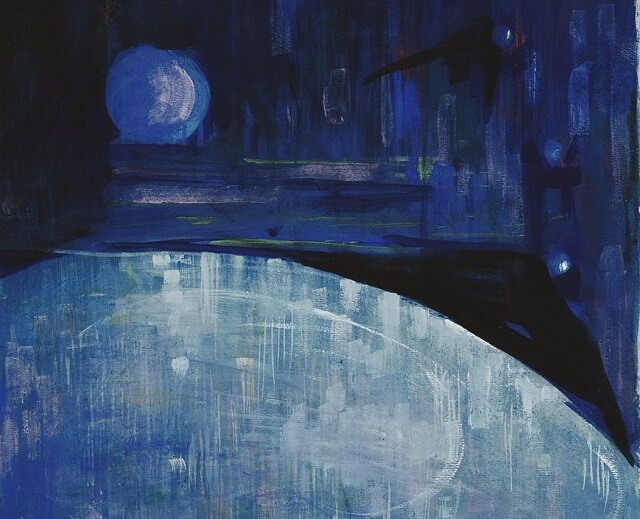
Image: "Creation of the World (III)" by Mikalojus Konstantinas Ciurlionis, 1905
Bereishit Rabbah 3:7. Zohar Vayikra 10a. ↩︎