Elazar Instructs the Soldiers
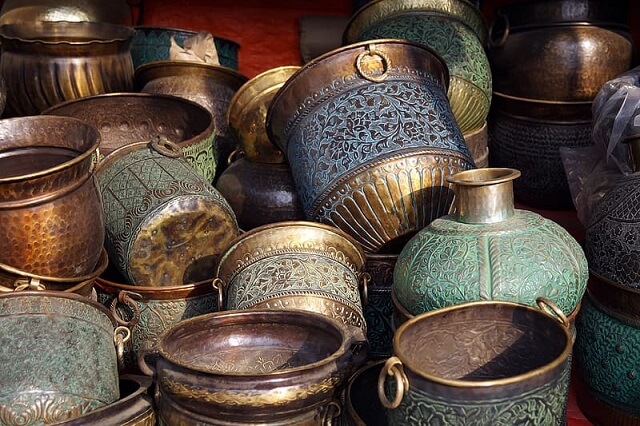
Following the punitive war against Midian, Elazar the High Priest taught the soldiers how to kasher the utensils they had captured during the campaign.
This is the Torah law that God commanded Moses: ... Any article that was used over fire, must be passed over fire and it will be pure; but it must be purified with the sprinkling water. However, that which was not used over fire, you must pass through water. (Num. 31:21-23)
Why was it Elazar who instructed the soldiers, and not Moses?
The Sages explained that Moses, in his anger at the soldiers for not conducting the war properly, forgot to instruct them about kashering the Midianite utensils. “Because Moses became angry, he came to err, and the laws of purifying gentile vessels escaped him” (Rashi 31:21, from the Sifrei).
Is there a connection between the cause for Moses’ anger and the particular laws that he forgot?
Also, this was not the first battle of these soldiers. Why didn’t they already learn the rules of kashering vessels after defeating the Amorite kings Sichon and Og?
Two Steps of Purification
We see that there are two steps to purifying used utensils obtained from non-Jews. First, we must purge any forbidden substances absorbed in the utensil. “Any article that was used over fire, must be passed over fire and it will be pure.” The second step is immersing the utensil in a mikveh. The waters of the ritual bath purify the vessel, preparing it to enter the domain of Israel. This second step is similar to the ritual immersion of converts, as they leave the non-Jewish world and join the Jewish people.
These two steps of kashering parallel the two stages by which the Land of Israel was acquired by the Jewish people.
The first stage took place during the era of the Avot. “Rise, walk the Land, through its length and breadth, for I will give it to you” (Gen. 13:17). Why did Abraham, Isaac, and Jacob need to walk throughout the Land of Israel? Their journeys — building altars, digging wells, raising crops — were analogous to the first step in purging a utensil, as we remove the prohibited substances absorbed in it.
The second stage was the actual conquest in the time of Joshua. The final conquest of the Land parallels the complete immersion of a utensil in a ritual bath. This act completed the transfer of the Land to the Jewish people.
The initial purification process of the Avot allows us to understand an astonishing Talmudic statement. The Sages wrote that during the seven years of conquering the Land, the Jewish people were permitted to eat pork (Chulin 17a). They were allowed to enjoy all of the spoils from the Canaanite nations — even pig meat! This was in accordance with God’s promise that “You will have houses filled with all good things that you did not put there” (Deut. 6:11).
Why did God permit the Israelites to eat blatantly non-kosher foods? This was only possible because the preparatory actions of the Avot had already cleansed the land of its impurities.
For this reason, there was no need to purify the utensils acquired in the battles with Sichon and Og. The lands of the Amorites took on the holiness of the Land of Israel (see Nachmanides on Num. 31:23).
Moses’ Mistake
Why then was it necessary to purify the spoils from the war in Midian? Moses in fact thought that it was not necessary. He saw this war as a conquest, and he thought the land of Midian would also acquire the holiness of the Land of Israel.
God, however, knew that the war would not be waged with pure motives. In the end, the land of Midian would not become part of the Land of Israel. Therefore, God commanded the soldiers to “take revenge for the Israelites” (Num. 31:2). This would not be a war of reprisal for God, but for the Jewish people.
Now we may understand the connection between Moses’ anger and his
mistake. He railed against the generals for not exacting vengeance against the Midianite women,
who had enticed the Israelites to rebellion and idolatry.
This error meant that the war could no longer be
considered a war for the sake of Heaven.
Moses’ anger led to his mistake. He failed to recognize that, in the new circumstances, this battle no longer belonged to the conquest of the Land of Israel. So it fell to Elazar to instruct the soldiers how to kasher the spoils from Midian.
(Shemuot HaRe’iyah, Matot-Masei 5690/1930)