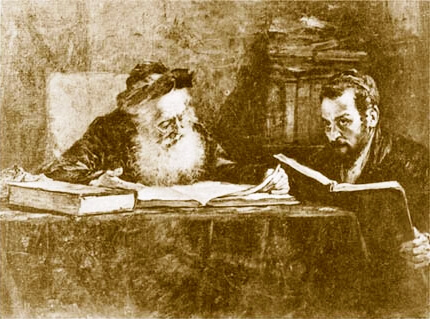
How should we learn Torah — with an open heart, or with a critical eye?
Moses told the people, “Pay attention (haskeit) and listen, Israel.” (Deut. 27:9) Why does Torah use this unusual word, haskeit?
One explanation proposed by the Talmud is that haskeit (הסכת) is a composite word, formed from the words hass (הס — be quiet, hush) and kateit (כתת — to shatter). When studying Torah, we should first be quiet and accepting, even if we fail to fully understand the reasoning. Only afterwards should we try to analyze and dissect what we have learned, raising whatever questions we have.
This follows the advice of Rava, the fourth-century Talmudic scholar, who counseled:
One should first study Torah and only afterwards scrutinize (Shabbat 63b).
Why is it wrong to question and criticize from the outset?
Acquiring a Complete Picture
If we attempt to analyze a topic immediately after having learned it, the results of our inquiry will be of poor quality, reflecting superficial and incomplete knowledge. We must first gain an overall understanding of the subject at hand and all relevant topics.
For this reason, the Sages advised that we train ourselves to listen carefully and acquire much knowledge before introducing our own opinions and views. If we have difficulty understanding certain matters, we should not be quick to criticize. Initially, we need the quiet patience of hass to uncritically absorb the subject matter and the methodology of study.
After we have gained a complete picture of the subject, then we may participate in the intellectual battles of milchamta shel Torah, “the battle of Torah.” Then we may kateit — attack and critique that which we feel is illogical or unreasonable. But we should not be hasty to criticize before acquiring expertise in the subject. Tragic errors often result from rash students who were too quick to challenge and tear down.
Thus Rava taught, “First study, and afterwards scrutinize.” We should first gain broad expertise before attempting to delve into in-depth investigations and suggest new interpretations. When Torah is initially approached with an open heart, the ensuing analysis with a critical eye will bring a blessing to all.
(Sapphire from the Land of Israel. Adapted from Ein Eyah vol. II, p. 390)
Illustration image: Maurycy Trębacz, The Dispute, c. 1920-1940