Suitable Wicks and Oils
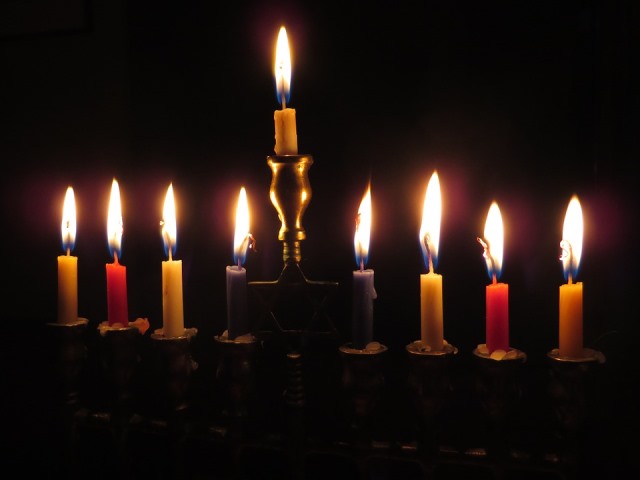
The Mishnah (Shabbat, chapter two) discusses which wicks and oils are suitable for Sabbath lights. Certain materials may not be used for wicks since they make “the flame sputter” and fail to burn evenly; and certain oils may not be used because “they do not flow freely to the wick.” With regard to Chanukah, however, the Talmud (Shabbat 21b) rules that these restrictions do not apply. Even wicks and oil that do not burn smoothly may be used for Chanukah lights. Why are all oils permitted for use on Chanukah, even when lit on Friday evening? Why this distinction between Sabbath and Chanukah lights?
The Sages required that Sabbath lights be lit from high-quality oils and wicks in order to prevent situations where one might be tempted to relight or adjust sputtering lights (and thus desecrate the Sabbath). They were more lenient, however, regarding Chanukah, since Chanukah lights need not be re-lit should the flame go out. Also, since it is forbidden to use their light for reading or other purposes, the Sages were less concerned that one would attempt to relight a poorly-lit Chanukah light.
The Lights of Chanukah
Rav Kook explained that the special rules of Chanukah lights reflect the nature of the Maccabean struggle against Greek dominance, in both political and cultural spheres.
The authentic heritage of Israel is Torah. The Torah’s eternal wisdom is symbolized by the Sabbath lights — lights that require a pure oil that burns clearly and brightly.
However, there have been many times during their long history when the Jewish people have been attracted to the wisdom and beliefs of other nations. This phenomenon is particularly prevalent when the Jewish people are ruled by other nations or exiled from their land. During these times of national vulnerability, many are drawn to the ideologies of powerful and successful nations, even if these beliefs are not thoroughly considered and may be based only on theories and speculations.
For such times, Divine providence provided the Jewish people with gifted scholars who were able to defend the Torah by utilizing these foreign ideas. One example is Maimonides, who attempted where possible to reconcile Aristotelian philosophy with the Torah.
Short-Lived Flame
However, these foreign philosophies lack the eternal truth of Torah. They are like flickering flames that illuminate only for a short time. After a generation or two, the assumptions upon which these ideas are based are often refuted. Utilizing foreign philosophies to bolster the Torah may be compared to lighting Chanukah lights with oils that fail to produce a bright and even light.
Nonetheless, when these beliefs are popular and widely-held, the generation is strongly drawn to them. If it were not possible to find some measure of agreement with the Torah, many would be tempted to reject the Torah altogether. In order to protect the nation, Divine providence allowed the possibility of aligning these fashionable ideas with the Torah’s wisdom. They do not always match neatly with practical mitzvot and Halachic rulings — in the words of the Talmud, ‘they do not flow freely to the wick’ — but with a little effort, they can be made to at least partially correspond.
We should be aware that such philosophies are not eternal truths and we are not responsible for their accuracy. “When their light goes out, they need not be re-lit.” Certainly we should not make practical changes to Torah observance based on these ideas — “it is forbidden to make use of its light.” They are useful only to put troubled minds to rest, not as a true foundation with practical implications. Thus the special rules of Chanukah lights aptly parallel the Maccabean struggle against the Greeks, at a time when Hellenism and Greek wisdom dominated the world with its new ideas.
Jewish Nationalism
There was a second arena in which the Maccabees contested the Greek empire: the military-political one. Here too, the Hasmonean rule did not follow the eternal path of Israel, which designated the monarchy to the descendants of David for all generations. The throne of David is compared to an eternal flame — “You promised him that his candle will never be extinguished” (from the Sabbath prayers). But the hour was not ripe for a Davidic king, and the temporary rule of the Hasmoneans provided stability and independence for many years.
The Davidic dynasty combined both Torah scholarship and political leadership. David studied Torah assiduously day and night (Berakhot 3b), and at the same time was energetic and decisive in establishing a secure reign. Authentic Jewish nationalism must be based on the light of Torah — “From Zion, Torah will come forth” (Isaiah 2:3).
In summary, the laws of Chanukah lights reflect the transient quality of the Hasmonean victory, both spiritually and materially. Spiritually — the accommodation of foreign philosophies that may be partially reconciled with the Torah’s teachings, as represented by oils that do not burn well. And materially — a political rule not of the Davidic dynasty. This corresponds to the wicks (the more material side of the lights) that fail to hold a constant flame. These achievements provided light, albeit a weak and unsteady one, for a people lacking true independence. They are only fit for Chanukah lights, commemorating a holiday that was not inscribed for all generations in the Biblical canon (Yoma 29a). Yet even though they are not the ideal, unlike the pure lights of the Sabbath, we need these lights during the precarious times of foreign occupation and exile.
Kodesh Heim
Despite their shortcomings, these transient lights are holy — kodesh heim. We should recognize in them the hand of God, that God prepared a path so that those attracted to the prevalent culture should not be lost. And the very fact that foreign ideas may be accommodated within the Torah is an indication that these ideas contain a kernel of eternal truth — a small cruse of pure oil, sealed with the stamp of High Priest.
(Silver from the Land of Israel, pp. 112-115. Adapted from Ein Eyah vol. III on Shabbat 21b (2:5).)