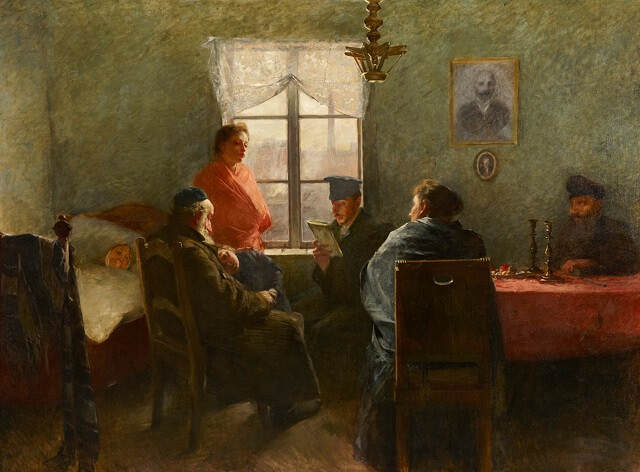
Even before the Torah was revealed at Mount Sinai, the Jewish people received several mitzvot at a place called Marah:
They came to Marah... there God taught them a decree and a law, and there He tested them. (Exod. 16:23-25)
According to Sanhedrin 56b, one of the mitzvot that God taught at Marah was the mitzvah of Shabbat. It appears that Marah was a prelude of sorts for receiving the Torah at Sinai. How did the mitzvah of Shabbat prepare them for the Sinaitic revelation? And in what way was Marah a “test” for the Jewish people?
Preparing to Receive the Torah
The area was called Marah because the waters there were bitter (mar).
When Moses cried out to God, He showed him a certain tree. Moses threw it in the water, and the water became sweet (Exod. 15:25).
When a person is ill, that which is sweet may taste bitter. Such was the case with the waters of Marah, which appeared to be bitter, but were in fact sweet. This is a metaphor for the Torah itself — its laws are sweet to those with a pure soul and a refined character, yet bitter and burdensome to those with a coarser nature (Maimonides, Hilchot De'ot 2:1).
Marah laid the groundwork for Sinai by reinforcing the traits of kindness and compassion that characterize the Jewish people (Yevamot 79a). The people would then be ready to receive the Torah, as their moral state would allow them to appreciate the sweetness of the Torah’s laws.
How did the mitzvah of Shabbat accomplish this?
Even though the Sabbath commemorates the creation of the universe, it was not given to all of humanity. Shabbat is a special gift for the Jewish people (Sanhedrin 58b). Why is that?
The Test of Marah
To bolster social order and cohesion, it is important that people are actively engaged in working for their livelihood. Work and business interactions help build relationships and trust between individuals and groups. Even if two people would not ordinarily be inclined to like one another, work can provide a platform for them to bridge any divides, as it is in their mutual interest to collaborate.
If people are not working together, however, these incentives are no longer present. It is human nature to prioritize one’s own interests. Without an impetus to gain the good will of others, people tend to revert to self-centered tendencies.[1]:
This was the test of Marah. The Jewish people were given the Sabbath day of rest — would they discover within themselves an innate quality of compassion? Would they remain considerate and accommodating to one another, despite the lack of material benefit to be gained from kindness on the day of rest?
The seven mitzvot of the Noahide Code, which are binding upon all of humanity, do not demand the refinement of human nature. They only require the avoidance of evil. The Torah, however, was given to the Jewish people in order to elevate them to be a holy people. The ethical ideals of Israel cannot be based on expediency and personal gain, but on a love for “that which is good and proper in the eyes of God” (Deut. 12:28). Therefore, it was necessary to bolster the foundations for their innate goodness. In this way, the mitzvot of Marah paved the way for the Torah’s revelation at Sinai.
(Adapted from Otzarot HaRe’iyah vol. II, pp. 172-173)
Image: "The Sabbath Rest" (Samuel Hirszenberg, 1894)
We have seen how social distancing measures to control the COVID-19 pandemic “have caused major problems in the economic, social, political and psychological spheres... The COVID-19 pandemic crisis has caused widespread unrest in society and unprecedented changes in lifestyle, work and social interactions, and increasing social distance has severely affected human relations.” ('Social Consequences of the COVID-19 Pandemic. A Systematic Review.’ Invest Educ Enferm. 2022;40(1):e10.) ↩︎