Like the Garden of Eden
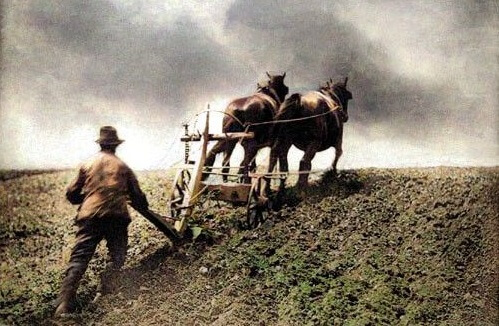
Ask any farmer — agricultural labor is hard work. Plowing, planting, weeding, pruning, harvesting, and so on. That, however, is not how it was supposed to be. The world was originally designed to be like life in the Garden of Eden. Agricultural labor was only cursed after Adam’s sin - “By the sweat of your brow you will eat bread” (Gen. 3:19).
As humanity advances morally, however, the earth responds in like measure with sublime blessing. The Talmud in Ketubot 111b foretells that, in the future, cakes and fine clothing will sprout directly from the ground. At that time, even physical labor will take on a nobler, more refined character.
We are granted a glimpse of this future world through the mitzvah of Shemitah, the Sabbatical year. During this year of cessation from all agricultural labor, we are content to partake of the land’s natural produce. Like the tranquil world of the Garden of Eden, we are able to enjoy the earth’s God-given bounty, without toil and labor.
Other aspects of the Garden of Eden are temporarily restored during the sabbatical year. With the prohibition of buying and selling Shemitah produce, economic competition is reduced. Even more: the heart is refined to recognize the common brotherhood of all creatures. We may eat of the earth’s produce only for as long as it is also available to the animals in the field. The Sabbatical and Jubilee years are a taste of a future utopia. They herald the coming of a sublime new world that is the result of a loftier spirituality.
Elevating Agriculture
Until then, it is our obligation to elevate agricultural labor from its lowly state. This is accomplished through the holy light found in technology and science. In the future, the Sages tell us, all artisans will leave their crafts and work the land (Yevamot 63a). This does not mean that they will no longer work in their respective professions, but that all crafts and sciences will be used to redeem the earth and its toil from its primordial curse.
This progress in agriculture, however, only redeems mankind. It is only a preparatory stage in the redemption of the entire world. In the final redemption, working the land will not be an obligation, but a privilege and a pleasure. We will pleasantly tour in the Garden of Eden ('Eden' meaning ‘pleasure'), working and guarding it.
There are future levels even beyond the Garden of Eden. Going past the garden to Eden itself, however, is beyond all prophetic vision; Eden is a realm that transcends all forms of labor and guarding.
(Gold from the Land of Israel, pp. 216-217. Adapted from Orot HaKodesh, vol. II, pp. 563-564.)